Today, Saiken Pump will explain to you how the stainless steel rotary lobe pump is used in the production of soy sauce, the particularity of sodium chloride in soy sauce, the severe corrosion, the loss of anti-rust ability and wear resistance of overcurrent parts that have been in contact for a long time . According to the characteristics of the soy sauce medium, the stainless steel rotary lobe pump has the following customizations and treatments. Therefore, in the service project of Helixi, special processing is carried out on the parts that come into contact with the material, which is not only effective against corrosion, but also wear-resistant. , but also increased life. Unobstructed improvement of production efficiency, effective maintenance of the ancient craft flavor of soy sauce, and a more mellow taste. At the same time, the product has strong self-absorption, stable conveying, low pulse and small vibration, and is used in the production section of finished soy sauce. Manufacturers and suppliers of rotary lobe pumps
Rotary lobe pump for delivery of edible flavors and fragrances: Substances extracted from natural flavors and fragrances by physical methods, mixtures obtained by microbial fermentation or enzymatic reactions. The medium is safe, the characteristics are diverse, the formula is unique, and the viscosity is low. Holly’s flavor and fragrance rotary lobe pump has good self-suction effect, high production efficiency, flexibility, stability and long service life. Provide enterprises with various ways of customization and interfaces, and choose different interfaces such as clamps, screws, and flanges to match the original equipment of the user, which is convenient and fast to use, reduces maintenance workload, and has high production efficiency. Manufacturers and suppliers of rotary lobe pumps.
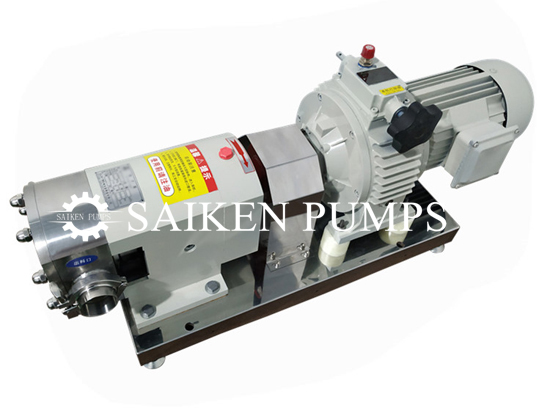
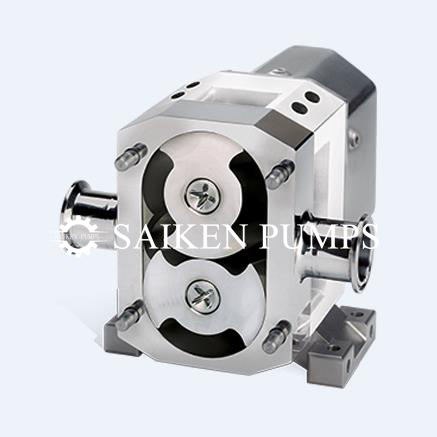
Rotor pump / Lobe Pump Introduction
Rotor Lobe pump Application
◆Rotor Lobe pump is suitable for transfering viscous high and low-viscous media in the food-processing,cosmetics and pharmaceutical Rotor Lobe pump industries. Rotor Lobe pump Technical specifications
◆ Maximum flow: 90m3 / H
◆ Maximum pressure: 15bar
◆ Maximum temperature: 150 ℃
◆ Maximum speed: 750 rpm
◆ Material: ASTM 316L, 1.4404
◆ Inside surface: Ra0.8μm
◆ Certificate: 3-A-02-11NO.1579; CE-MD / 06-42; FDA.177.2600
◆ Horizontal TUL
◆ Vertical TUR
◆ Butterfly rotor (standard)
◆ Mechanical seal: Single mechanical seal (standard) double mechanical seal (option) Material SIC / SIC, TC / TC
◆ Suitable for CIP cleaning and SIP sterilization
Rotor Lobe pump is suitable for transfering viscous high and low-viscous media in the food-processing,cosmetics and pharmaceutical Rotor Lobe pump industries.
The rotor of the rotary lobe pump maintains a certain gap between the rotor and the rotor, the rotor and the pump body, has no friction coefficient, and has a long service life. Saiken Pumps will introduce the advantages of the rotary lobe pump to you.
1. The rotary lobe pump is easy to assemble and disassemble, easy to maintain and clean, and has few wearing parts.
2. The rotary lobe pump adopts a modular design concept. The same type of pump has many different types of rotors, which can be interchanged to meet the needs of different working conditions.
3. The rotary lobe pump can transport materials with a viscosity of 1cp-2 million cps, as well as materials with a certain solid content.
4. The rotary lobe pump can transport gas, liquid and solid mixed materials.
5. After the rotary lobe pump is equipped with a frequency converter and a flow meter, the measurement is accurate.
6. The rotary lobe pump can be connected by flange type, screw type and clamp type according to customer needs.
7. The rotary lobe pump has a high level of hygiene and supports CIP and SIP; the surface roughness of the pump flow parts is 0.2~0.6um
8. Rotary lobe pump Sanitary safety valve does not require external piping, and has a high level of hygiene.
How to alleviate the loss of capacity of the centrifugal pump? At this stage, the efficiency of most models and specifications of centrifugal pumps is generally around 70-80%, and the efficiency of a very small number of customized large-flow models and specifications of micro-rotor pumps is around 90%. The primary factor that harms the efficiency of centrifugal pumps depends on the kinetic energy loss that occurs in the pump. This loss is mainly mechanical equipment loss, hydropower loss and capacity loss. The loss of mechanical equipment is mainly the friction loss of the centrifugal impeller cover plate and the water and the friction loss of the centrifugal pump rolling bearing, the friction loss on the water pump seal, and the hydropower loss is mainly the influence or vortex caused by the change of the speed and angle of the fitness movement of the water in the pump. Loss, the friction loss between the water and the flow passages in the pump and the rolling friction loss of the water flow. The capacity loss is mainly the loss caused by the high pressure water in the pump leaking to the low voltage area. The common proportion of each loss in the total loss varies with the specific speed of the centrifugal pump. It happens that this loss reduces the efficiency of the centrifugal pump. From the 20th century to the present, the efficiency of centrifugal pumps has not improved much in the past few decades. Piston rotor pump manufacturers are basically standing still The root cause of this situation depends on the fact that there has been no way to significantly reduce the loss of kinetic energy in the pump. Because the centrifugal pump of the mobile rotor lobe pump manufacturer is a kind of universal equipment with a long history, everyone generally feels that it has been improved and more perfect, and most of the losses in the pump have been reduced to a relatively low level. There is not much development potential to tap. Up. But the objective facts are not the case. At present, centrifugal pumps, especially those that use more closed centrifugal impellers, still have a lot of potential for development in reducing the loss of kinetic energy in the pump. (1) Improve the precision of forging; improve the smoothness of the flow passage surface of the centrifugal impeller rear cover and the inner cavity of the pump to reduce the friction loss of water flow. (2) Improve the processing accuracy, reduce the sealing gap or process the sealing ring into a mystery shape to reduce the volume loss in the pump. lobe rotor pump manufacturers and suppliers
The lobe rotor pump is a positive displacement pump with a simple structure and adopts MIP (online maintenance) design. The inlet and outlet pipelines of the rotor lobe pump are in one line. There is no running pipeline. The space requirement is small. There is no need to move the pipeline during maintenance. Special tools can replace high-strength protective linings and simple mechanical seals, saving customers a lot of maintenance costs. Therefore, the rotor pump chemical industry has been widely used.
The application of rotor lobe pump in daily chemical industry Optional rotors of a variety of materials to adapt to various media; symmetrical rotor design, stable output with small pulses; allowing high-viscosity substances to pass through. It can be used in AES, LAS, AOS, K12, glycerin, sorbitol, fatty alcohol, sulfate, facial cleanser, shampoo, detergent, shower gel, skin cream, toothpaste, soap, washing powder, etc.
Application of rotor lobe pump in chemical fiber industry The rotor lobe pump has super self-priming ability, no need for human operation at the water inlet; symmetrical rotor design, no clogging, allowing idling, gas-liquid mixed transmission, fine, small particles, high-viscosity substances through; lifting and conveying distance is long. It is suitable for viscose porridge, vinylon sizing, acrylic sizing, spandex sizing, polyester chips, polyester, polypropylene, man-made fibers, functional fibers, etc. Third, the application of rotor lobe pumps in the fine chemical industry Optional multi-material rotors, suitable for various media, symmetrical rotor design, stable output with small pulses; allowing high-viscosity substances to pass. Suitable for dyes, pigments, various intermediates, various slurries, chemical additives, printing and dyeing auxiliaries, leather auxiliaries, silicone oils, adhesives, shoe polishes, suspensions, and various colloidal materials. Fourth, the application of rotor lobe pumps in the chemical coating industry Optional rotors of a variety of materials to adapt to various media; symmetrical rotor design, stable output with small pulses; allowing high-viscosity substances to pass through. Suitable for paints, coatings, inks, insulating paints, resins, additives, organic solvents, etc. Rotor lobe pump manufacturers and suppliers
The lobe rotor pump is a positive displacement pump with a simple structure and adopts MIP (online maintenance) design. The pump inlet and outlet pipelines are in one line, there is no running pipeline, the space requirement is small, and there is no need to move the pipeline during maintenance, and no special tools are needed. , High-strength protective liner and simple mechanical seal can be replaced, saving customers a lot of maintenance costs. Therefore, the rotor pump chemical industry has been widely used. 1. The application of rotor lobe pump in daily chemical industry Optional rotors of a variety of materials to adapt to various media; symmetrical rotor design, stable output with small pulses; allowing high-viscosity substances to pass through. It can be used in AES, LAS, AOS, K12, glycerin, sorbitol, fatty alcohol, sulfate, facial cleanser, shampoo, detergent, shower gel, skin cream, toothpaste, soap, washing powder, etc. 2. Application of rotor lobe pump in chemical fiber industry The rotor lobe pump has super self-priming ability, no need for human operation at the water inlet; symmetrical rotor design, no blockage, allows idling, gas-liquid mixed transport, fine, small particles, high viscosity materials through; lifting and transporting distance is long. It is suitable for viscose porridge, vinylon sizing, acrylic sizing, spandex sizing, polyester chips, polyester, polypropylene, man-made fibers, functional fibers, etc. Third, the application of rotor lobe pumps in the fine chemical industry Optional multi-material rotors, suitable for various media, symmetrical rotor design, stable output with small pulses; allowing high-viscosity substances to pass. Suitable for dyes, pigments, various intermediates, various slurries, chemical additives, printing and dyeing auxiliaries, leather auxiliaries, silicone oils, adhesives, shoe polishes, suspensions, and various colloidal materials. Fourth, the application of rotor lobe pumps in the chemical coating industry Optional rotors of a variety of materials to adapt to various media; symmetrical rotor design, stable output with small pulses; allowing high-viscosity substances to pass through. Suitable for paints, coatings, inks, insulating paints, resins, additives, organic solvents, etc.
Low-load operation of high-lift pump Many people think that the lower the pumping head, the smaller the motor load. Under the misleading of this kind of misunderstanding, when buying a rotor lobe pump, the head of the lobe rotor pump is often selected very high. In fact, for positive displacement pumps, when the rotor lobe pump model is determined, its power consumption is proportional to the actual flow rate of the rotor lobe pump. The flow of the pump will decrease with the increase of the head, so the higher the head, the smaller the flow and the lower the power consumption. Conversely, the lower the head, the greater the flow, and the greater the power consumed. Therefore, in order to prevent the motor from overloading, it is generally required that the actual pumping head of the rotor lobe pump is not less than 60% of the nominal head. When the high head is used for pumping water with a low head, the motor is overloaded and heats up, which can burn the motor seriously. For emergency use, a gate valve for adjusting the amount of water must be installed on the outlet pipe to reduce the flow and prevent the motor from overloading. Pay attention to the temperature rise of the motor. If the motor is overheated, the water outlet flow should be reduced or shut down in time. This is also prone to misunderstanding. Some operators think that blocking the water outlet and forcibly reducing the flow will increase the motor load. In fact, the opposite is true. The outlet pipe of the regular high-power centrifugal pump drainage and irrigation unit is equipped with a gate valve. In order to reduce the motor load when the unit starts, the gate valve should be closed first, and the gate valve should be gradually opened after the motor is started.
Large-caliber pump with small water pipe for pumping water Many users think that this can increase the actual head. In fact, the actual head of the rotor lobe pump = total head-loss head. When the model of the lobe rotor pump is determined, the total head is fixed; the loss head mainly comes from the pipeline resistance. The smaller the pipe diameter, the greater the resistance, and the greater the loss head. Therefore, after the pipe diameter is reduced, the actual head of the lobe pump Not only cannot the head increase, but it will decrease, resulting in a decrease in the efficiency of the rotor lobe pump. In the same way, when a small-diameter rotor lobe pump uses a large water pipe to pump water, the actual head of the pump will not be reduced. On the contrary, the loss of the head will be reduced due to the decrease of the pipeline resistance, and the actual head will be increased. There are also users who think that pumping with large water pipes for small-diameter pumps will inevitably increase the motor load. They believe that as the pipe diameter increases, the water in the outlet pipe will exert greater pressure on the pump impeller, which will greatly increase the motor load. As everyone knows, the size of the liquid pressure is only related to the height of the head, and has nothing to do with the cross-sectional area of the water pipe. As long as the head is constant, the size of the impeller of the rotor lobe pump remains the same, no matter how large the pipe diameter is, the pressure acting on the impeller is constant. Only after the pipe diameter is increased, the water flow resistance will decrease, and the flow will increase, and the power consumption will also increase appropriately. But as long as it is within the rated head range, the pump can work normally no matter how the pipe diameter is increased, and it can also reduce pipeline loss and improve pump efficiency.
The horizontal pipe section of the inlet pipe is too straight or upturned Doing so will cause air to accumulate in the water inlet pipe, reduce the vacuum of the water pipe and the pump, reduce the suction lift of the pump, and reduce the water output. The correct approach is: its horizontal section should be slightly inclined towards the direction of the water source, it should not be level, let alone tilt upwards.
Too many elbows in the inlet pipe If more elbows are used in the inlet pipe, it will increase the local water flow resistance. And the elbow should turn in the vertical direction, and it is not allowed to turn in the horizontal direction to avoid gathering air.
The inlet of the rotor lobe pump is directly connected to the elbow This will make the water flow unevenly distributed when entering the impeller through the elbow. When the diameter of the water inlet pipe is larger than the water inlet of the pump, an eccentric reducing pipe should be installed. The flat part of the eccentric reducer should be installed on the top, and the inclined part should be installed on the bottom. Otherwise, the air will gather, the water output will be reduced or the water will not be pumped, and there will be crashing noises and so on. If the diameter of the water inlet pipe and the pump inlet are the same, a straight pipe should be added between the pump inlet and the elbow. The length of the straight pipe shall not be less than 2 to 3 times the diameter of the water pipe.
The bottom end of the inlet pipe with the bottom valve is not vertical If installed in this way, the valve cannot close by itself, causing water leakage. Correct installation method: the inlet pipe with bottom valve should preferably be vertical at the bottom section. If the vertical installation is not possible due to terrain conditions, the angle between the axis of the water pipe and the horizontal plane should be above 60°. The position of the water inlet of the water inlet pipe is wrong The distance of the water inlet of the water inlet pipe from the bottom of the water inlet pool and the wall of the pool is less than the diameter of the water inlet. If there is dirt such as mud and sand at the bottom of the pool, and the distance between the water inlet and the bottom of the pool is less than 1.5 times the diameter, it will cause poor water intake or suction of mud and sand debris during pumping, which will block the water inlet. When the water inlet depth of the water inlet pipe is not enough, this will cause vortexes on the water surface around the water inlet pipe, which will affect the water inlet and reduce the water output. The correct installation method is: the depth of the medium and small pumps should not be less than 300~600mm, and the large pumps should not be less than 600~1000mm.
The water outlet is above the normal water surface of the outlet pool If the water outlet is above the normal water level of the outlet pool, although the pump head is increased, the flow rate is reduced. If the water outlet must be higher than the water level of the pool due to terrain conditions, elbows and short pipes should be installed at the nozzle to make the water pipe a siphon type and reduce the height of the water outlet.
What is the relationship between the head of the rotor lobe pump and the inlet and outlet water? 1. Low-load operation of high-lift pump Many people think that the lower the pumping head, the smaller the motor load. Under the misleading of this kind of misunderstanding, when buying a rotor lobe pump, the head of the rotor lobe pump is often selected very high. In fact, for positive displacement pumps, when the rotor lobe pump model is determined, its power consumption is proportional to the actual flow rate of the rotor lobe pump. The flow of the pump will decrease with the increase of the head, so the higher the head, the smaller the flow and the lower the power consumption. Conversely, the lower the head, the greater the flow, and the greater the power consumed. Therefore, in order to prevent the motor from overloading, it is generally required that the actual pumping head of the rotor lobe pump is not less than 60% of the nominal head. When the high head is used for pumping water with a low head, the motor is overloaded and heats up, which can burn the motor seriously. For emergency use, a gate valve for adjusting the amount of water must be installed on the outlet pipe to reduce the flow and prevent the motor from overloading. Pay attention to the temperature rise of the motor. If the motor is overheated, the water outlet flow should be reduced or shut down in time. This is also prone to misunderstanding. Some operators think that blocking the water outlet and forcibly reducing the flow will increase the motor load. In fact, the opposite is true. The outlet pipe of the regular high-power centrifugal pump drainage and irrigation unit is equipped with a gate valve. In order to reduce the motor load when the unit starts, the gate valve should be closed first, and the gate valve should be gradually opened after the motor is started. 2. Large-caliber pump with small water pipe for pumping water Many users think that this can increase the actual head. In fact, the actual head of the rotor lobe pump = total head-loss head. When the model of the lobe rotor pump is determined, the total head is fixed; the loss head mainly comes from the pipeline resistance. The smaller the pipe diameter, the greater the resistance, and the greater the loss head. Therefore, after the pipe diameter is reduced, the actual head of the lobe pump Not only cannot the head increase, but it will decrease, resulting in a decrease in the efficiency of the rotor lobe pump. In the same way, when a small-diameter rotor lobe pump uses a large water pipe to pump water, the actual head of the pump will not be reduced. On the contrary, the loss of the head will be reduced due to the decrease of the pipeline resistance, and the actual head will be increased. There are also users who think that pumping with large water pipes for small-diameter pumps will inevitably increase the motor load. They believe that as the pipe diameter increases, the water in the outlet pipe will exert greater pressure on the pump impeller, which will greatly increase the motor load. As everyone knows, the size of the liquid pressure is only related to the height of the head, and has nothing to do with the cross-sectional area of the water pipe. As long as the head is constant, the size of the impeller of the rotor lobe pump remains the same, no matter how large the pipe diameter is, the pressure acting on the impeller is constant. Only after the pipe diameter is increased, the water flow resistance will decrease, and the flow will increase, and the power consumption will also increase appropriately. But as long as it is within the rated head range, the pump can work normally no matter how the pipe diameter is increased, and it can also reduce pipeline loss and improve pump efficiency. 3. The horizontal pipe section of the inlet pipe is too straight or upturned Doing so will cause air to accumulate in the water inlet pipe, reduce the vacuum of the water pipe and the pump, reduce the suction lift of the pump, and reduce the water output. The correct approach is: its horizontal section should be slightly inclined towards the direction of the water source, it should not be level, let alone tilt upwards. 4. Too many elbows in the inlet pipe If more elbows are used in the inlet pipe, it will increase the local water flow resistance. And the elbow should turn in the vertical direction, and it is not allowed to turn in the horizontal direction to avoid gathering air. 5. The inlet of the rotor lobe pump is directly connected to the elbow This will make the water flow unevenly distributed when entering the impeller through the elbow. When the diameter of the water inlet pipe is larger than the water inlet of the pump, an eccentric reducing pipe should be installed. The flat part of the eccentric reducer should be installed on the top, and the inclined part should be installed on the bottom. Otherwise, the air will gather, the water output will be reduced or the water will not be pumped, and there will be crashing noises and so on. If the diameter of the water inlet pipe and the pump inlet are the same, a straight pipe should be added between the pump inlet and the elbow. The length of the straight pipe shall not be less than 2 to 3 times the diameter of the water pipe. 6. The bottom end of the inlet pipe with the bottom valve is not vertical If installed in this way, the valve cannot close by itself, causing water leakage. Correct installation method: the inlet pipe with bottom valve should preferably be vertical at the bottom section. If the vertical installation is not possible due to terrain conditions, the angle between the axis of the water pipe and the horizontal plane should be above 60°. The position of the water inlet of the water inlet pipe is wrong The distance of the water inlet of the water inlet pipe from the bottom of the water inlet pool and the wall of the pool is less than the diameter of the water inlet. If there is dirt such as mud and sand at the bottom of the pool, and the distance between the water inlet and the bottom of the pool is less than 1.5 times the diameter, it will cause poor water intake or suction of mud and sand debris during pumping, which will block the water inlet. When the water inlet depth of the water inlet pipe is not enough, this will cause vortexes on the water surface around the water inlet pipe, which will affect the water inlet and reduce the water output. The correct installation method is: the depth of the medium and small pumps should not be less than 300~600mm, and the large pumps should not be less than 600~1000mm. 8. The water outlet is above the normal water surface of the outlet pool If the water outlet is above the normal water level of the outlet pool, although the pump head is increased, the flow rate is reduced. If the water outlet must be higher than the water level of the pool due to terrain conditions, elbows and short pipes should be installed at the nozzle to make the water pipe a siphon type and reduce the height of the water outlet.
Advantages of rotor lobe pump used in mine well point drainage system When mining a mine, the groundwater in the mine needs to be discharged in time by pumping equipment. The well-point drainage method is a construction method that can continuously pump and drain groundwater. The well point construction method is a construction method in which a series of well points are buried below the groundwater surface at intervals of 1 to 2 m, and the groundwater is forcibly sucked by using self-priming pumps or vacuum pumps. The sucked water is collected from the suction pipe through the rotary joint in the well point main pipe for drainage. The traditional well point drainage system mostly uses vacuum pumps, but after the vacuum pump satisfies the suction function, there are also many drawbacks, and the speed of vacuum formation is slow; working noise Large; In addition, when the vacuum pump is working, it needs to be fitted with one or more vacuum tanks. The complicated system and large space occupation are very unsuitable for non-stationary construction sites such as mining. As a kind of pump equipment with strong self-priming and low noise, the rotor pump is mostly used in the well point drainage system. Its specific advantages are as follows:
Strong self-priming ability In terms of self-priming performance, thanks to the ingenious design principle (the medium is filled in the sealed space in the pump cavity and pumped along with the movement of the sealed space), the lobe rotor pump can form a vacuum in a short time without requiring With the vacuum tank, there is no need to inject liquid into the pump cavity during the start-up time; the self-priming height can reach 9 meters water column.
Portable or mobile In terms of portability, the lobe rotor pump can be driven by a diesel engine, eliminating the driving obstacles of outdoor operation without power supply: At the same time, Saiken Pump also designed a semi-mobile well point drainage pump system, after the pump is connected to the drive system They are installed together on an integral base with pulleys under the base and a lifting frame at the top to facilitate the transfer of pump equipment to different places of use.
Strong wear resistance The lobe rotor pump can handle up to 85% solid content grinding mud, and can replace centrifugal slurry pumps, hose pumps, diaphragm pumps, etc. Compared with hoses and diaphragm pumps, the lobe rotor pump has a large flow range and a high pressure level, and Ensure stable transportation without pulsation. Rotor lobe pump manufacturers and suppliers
The pump cavity of the rotorlobe pump is large in volume, which is suitable for conveying the medium with high viscosity and high solid content. The centrifugal pump transports the medium. Once the medium becomes viscous, the flow or pressure will drop sharply.
The lobe rotor pump is an elastomer rotor, which has good flexibility and wear resistance, can achieve mixed gas-liquid-solid transportation and is resistant to cavitation. The centrifugal pump is a metal impeller, which can only transport relatively clean and fluid materials, and cannot mix gas, liquid and solid.
The lobe rotor pump adopts a three-lobe rotor with a spiral line, with small pulsation, low shear, and stable delivery. The speed of centrifugal pumps is generally very high, up to thousands of revolutions per minute, which is very shearing to the medium.
The lobe rotor pump is easy to maintain and can be repaired online. In addition, the back cover of the lobe rotor pump can be repaired without disassembling the pump body and pipeline. The centrifugal pump needs to be disassembled and repaired.
Comparison of lobe rotor pump and screw pump
Conveying directionThe conveying direction of the lobe rotor pump can be reversed, and the pump has a completely symmetrical structure; The screw pump cannot be reversed, and the seal is under pressure when it is conveyed in the reverse direction.
Service lifeThe wear parts of the lobe rotor pump have a long service life, and the wear on the flow parts mainly comes from the abrasive and corrosive components in the medium. The service life of the screw pump is low. The friction between the rotor and the stator, the particulate matter in the medium, etc., simultaneously affect the service life of the wearing parts. The stress generated by the eccentric rotating rotor is all borne by the stator, which intensifies the wear between the parts, even if it is When transporting media without any particulate matter, the stator of the pump will gradually wear out.
Spare parts costThe cost of spare parts for the lobe rotor pump is very low. The patented adjustable rotor and replaceable rotor tip of the lobe rotor pump minimize the cost of spare parts. The cost of replaceable liners and mechanical seals is also very low. The cost of accessories only accounts for 10% of the whole pump~ Around 15%. The cost of spare parts for screw pumps is very high. Due to the fierce price war between screw pump manufacturers, it is not profitable to sell the whole pump. Now the profits of screw pump manufacturers mainly come from the sales of accessories. An extreme example is the price of a set of accessories. Higher than the price of the whole pump.
Maintenance The maintenance of the lobe rotor pump is very easy, no need to disassemble the pipeline, few special tools, small space, and small manpower. It is not easy to repair the screw pump. Every maintenance needs to be disassembled and removed. The universal joint, stator, rotor and other parts must be disassembled with special tools. The repair work requires a large space to complete, and more than 2 people can complete the maintenance. Work.



 saikenpumps